Important things to know
Data analytics has become one of the most in-demand skill sets in the modern economy, and salaries reflect that. Whether you're considering a career pivot, negotiating your next offer, or benchmarking your team's pay, understanding what data analysts actually earn and why the numbers vary so much. This guide breaks down data analyst compensation across the United States and Canada, by experience, location, industry, and skill set.
The Big Picture: Average Salaries at a Glance
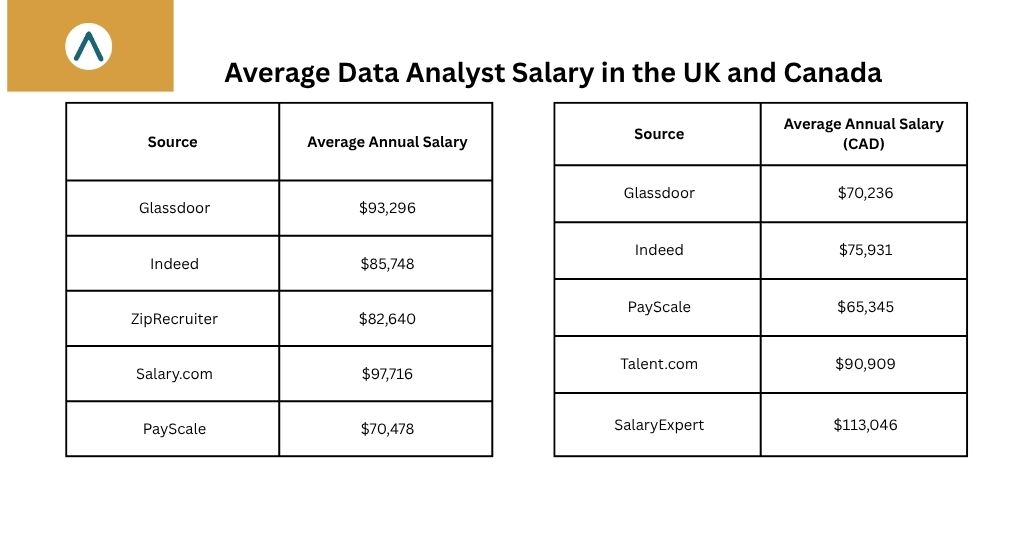
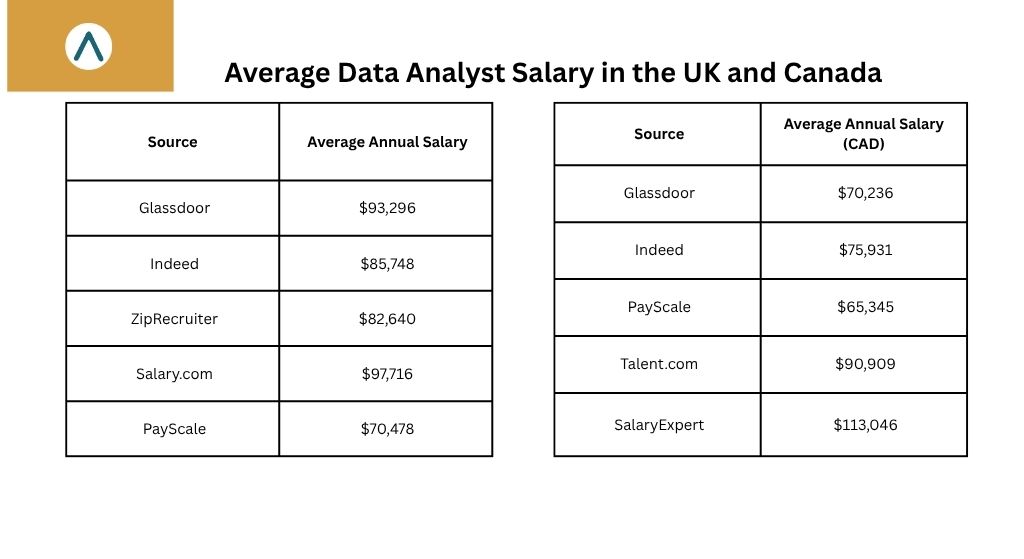
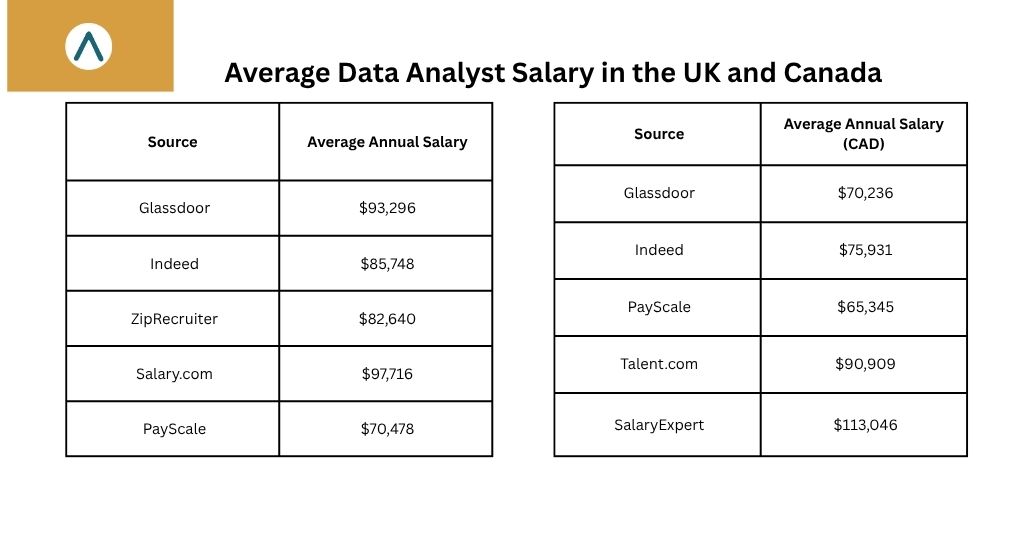
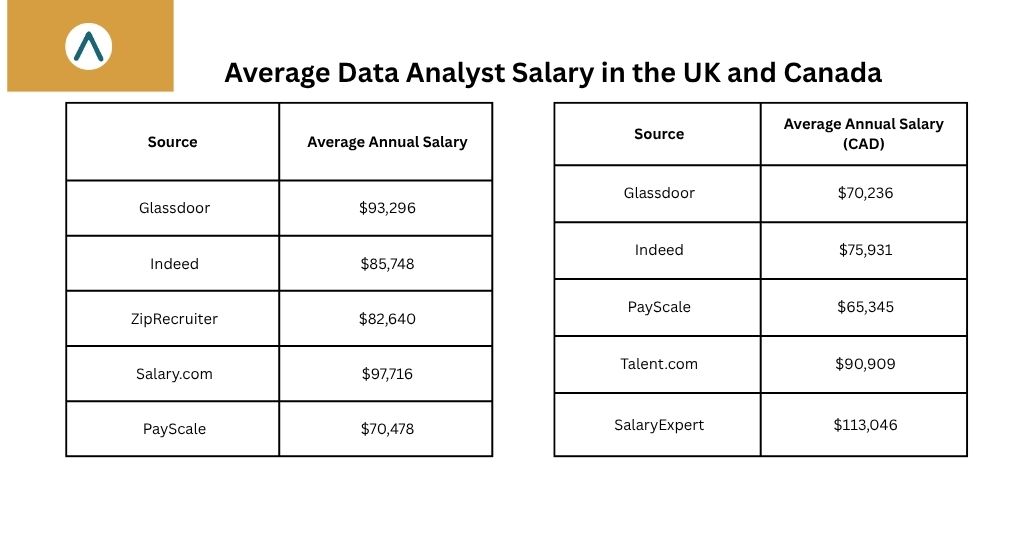
Salary figures for data analysts vary widely depending on the source, methodology, and whether total compensation or base salary is being measured. Here's a snapshot of what major platforms report for 2026:
United States
| Source | Average Annual Salary |
| Glassdoor | $93,296 |
| Indeed | $85,748 |
| ZipRecruiter | $82,640 |
| Salary.com | $97,716 |
| PayScale | $70,478 |
Canada (CAD)
| Source | Average Annual Salary (CAD) |
| Glassdoor | $70,236 |
| Indeed | $75,931 |
| PayScale | $65,345 |
| Talent.com | $90,909 |
| SalaryExpert | $113,046 |
The spread across sources is real and it reflects differences in sample sizes, job titles included, and whether figures capture base pay only or total compensation. A reasonable middle-ground estimate for a data analyst in the US sits around $85,000–$95,000 base in 2026, while Canadian counterparts typically earn CAD $65,000–$90,000 base.
Salary by Experience Level (United States)
Experience is the single strongest predictor of where you land in the pay range. Here's how compensation typically scales:
- Entry-Level (0–2 years)
Starting salaries generally fall between $55,000 and $75,000. Roles at this level focus on data cleaning, basic reporting, and supporting senior analysts. PayScale pegs the entry-level average at around $63,574 in total compensation. - Early Career (2–4 years)
After a few years on the job, salaries climb to the $70,000–$90,000 range. PayScale reports an average of $69,723 for analysts with 1–4 years of experience. At this stage, professionals begin owning projects independently and developing proficiency in SQL, Python, and BI tools. - Mid-Career (5–10 years)
Mid-career analysts typically earn $90,000–$120,000. Specializations like predictive analytics, product analytics, or analytics engineering become more common and more lucrative. Analysts with 5–10 years of experience often see wage increases of up to 35% compared to their entry-level salaries. - Senior-Level (8+ years)
Senior data analysts command $110,000–$165,000+. Glassdoor reports a senior-level salary range of $82,339 to $166,855 for analysts with at least 8 years of experience. These roles involve managing analytics functions, mentoring junior staff, and driving business strategy through data.
Salary by Experience Level (Canada)
The Canadian market follows a similar progression but at a lower absolute level, partly reflecting differences in cost of living and market depth.
| Experience Level | Average Salary (CAD) |
| Entry Level (1–3 years) | ~$79,583 |
| Mid-Career | ~$90,000–$110,000 |
| Senior Level (8+ years) | ~$140,190 |
Glassdoor's salary trajectory for Canada runs from approximately CAD $65,357 at the start of a career to CAD $120,483 at the most senior levels.
Skills That Move the Needle
Tool stack is a major differentiator because it sometimes add $10,000–$25,000 to a base offer. The three skills that move salary the most: SQL is still the baseline. Non-negotiable for virtually every data analyst role. Python knowledge adds substantial value, especially for analysts moving into analytics engineering or data science-adjacent roles. Analysts who combine SQL with Python earn meaningfully more. The combination of SQL + BI tool + Python consistently commands premium pay across all experience levels.
Additional skills that boost compensation include statistical analysis, machine learning fundamentals, cloud platforms (particularly AWS), and dbt for analytics engineering workflows. On the certification front, relevant credentials include the Microsoft PowerBI Data Analyst certification and the AWS Certified Data Analytics certification (for cloud-heavy roles) which is well-recognized across industries like finance, healthcare, and consulting.
US vs. Canada: How Do They Compare?
At face value, US salaries appear significantly higher. But several factors complicate a direct comparison:
- Currency gap: The USD/CAD exchange rate means that even equivalent CAD figures translate to lower USD amounts.
- Total compensation: US tech companies often supplement base salaries with substantial equity and bonuses. Built In reports average total compensation (base + cash) of $127,885 in the US once bonuses are factored in.
- Cost of living: Canadian cities, particularly outside Toronto and Vancouver, offer a lower cost of living. A CAD $80,000 salary in Calgary often delivers comparable or better purchasing power than $85,000 USD in a mid-tier US city.
- Benefits structure: Canada's universal healthcare system means employers don't bear the same benefits overhead, though take-home pay comparisons need to account for tax differences as well.
The data analyst job market in 2026 remains strong and well-compensated, with clear levers for increasing your earning potential: Industry matters as much as location because a tech-sector analyst earns materially more than one in retail or government; your tool stack drives your pay, SQL + Python + a BI tool is the combination that consistently commands top offers; secondary tech markets in both countries are increasingly competitive, offering strong salaries with better cost-of-living ratios than traditional hubs
Whether you're just entering the field or benchmarking a senior offer, use multiple salary sources, adjust for your specific industry and city, and factor in total compensation not just base salary before making your next career move.
Quite frankly. you can keep getting stuck in your data analytics career because bootcamps alone don't prepare you for the actual thing and generic projects on Kaggle without real business impacts still leave a gap in your ability to communicate how you solve business problems to potential employers and stakeholders. This is why many people who are jumping on our data analytics work experience program are landing jobs easily because we have built a low-risk work environment structure that helps you work on real projects with real business impacts, get guiidance from full-time Data Analysts who have over a decade of experience. Your employability skills are also sharpened as part of the benefit of the program, lifetime access to a free portfolio website, work reference letter, etc. Here is a link to book a free clarity call with our team and have all your questions answered before enroling for the next cohort.